1
/
of
1
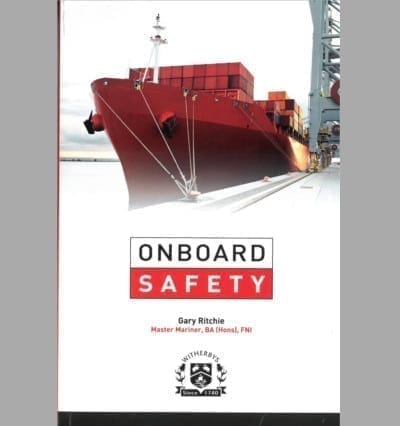
Onboard Safety (2nd, 2017) (ebook)
SKU:e6044
Regular price
$60.00 AUD
Sale price
$60.00 AUD
Regular price
Unit price
/
per
Tax included.
Shipping calculated at checkout.
Expected delivery date:
21 Jun
Usually ready in 2-3 days.
Couldn't load pickup availability

Specifications
Description
Onboard safety is a wide ranging and expansive subject that includes aspects of all operations conducted onboard all ship types. From the simplest one man task to the navigation and manoeuvring of the largest ship in the world, safety is central to the modern shipping industry.
Oil tankers, gas carriers, car carriers, bulk carriers, container vessels and specialised offshore support vessels all have particular aspects of their operation that require certain skills, competence and levels of safety awareness from their crews. However, there are a vast number of shipboard operations that are common
to all ships, irrespective of their design and purpose, and it is those common aspects of safety that this book highlights.
The majority of these key elements of safety are not new. The shipboard safety organisation has existed for many years and risk assessments have always been a central part of shipboard safety, although in a less formal manner. Formalised risk assessments, more detailed permit to work systems and more intensive induction and familiarisation processes are all now incorporated into shipping company safety management systems, and it is to these standards that the modern seafarer must adhere.
By summarising all of these key elements and by providing, where necessary, case studies of related incidents, it is hoped that this book will act as a comprehensive introduction to shipboard safety for crews, trainees and shoreside personnel.
Oil tankers, gas carriers, car carriers, bulk carriers, container vessels and specialised offshore support vessels all have particular aspects of their operation that require certain skills, competence and levels of safety awareness from their crews. However, there are a vast number of shipboard operations that are common
to all ships, irrespective of their design and purpose, and it is those common aspects of safety that this book highlights.
The majority of these key elements of safety are not new. The shipboard safety organisation has existed for many years and risk assessments have always been a central part of shipboard safety, although in a less formal manner. Formalised risk assessments, more detailed permit to work systems and more intensive induction and familiarisation processes are all now incorporated into shipping company safety management systems, and it is to these standards that the modern seafarer must adhere.
By summarising all of these key elements and by providing, where necessary, case studies of related incidents, it is hoped that this book will act as a comprehensive introduction to shipboard safety for crews, trainees and shoreside personnel.
Onboard Safety (2nd, 2017) (ebook)
Regular price
$60.00 AUD
Sale price
$60.00 AUD
Regular price
Unit price
/
per
Onboard Safety (2nd, 2017) (ebook)
Regular price
$60.00 AUD
Sale price
$60.00 AUD
Regular price
Unit price
/
per
Product description
Onboard safety is a wide ranging and expansive subject that includes aspects of all operations conducted onboard all ship types. From the simplest one man task to the navigation and manoeuvring of the largest ship in the world, safety is central to the modern shipping industry.
Oil tankers, gas carriers, car carriers, bulk carriers, container vessels and specialised offshore support vessels all have particular aspects of their operation that require certain skills, competence and levels of safety awareness from their crews. However, there are a vast number of shipboard operations that are common
to all ships, irrespective of their design and purpose, and it is those common aspects of safety that this book highlights.
The majority of these key elements of safety are not new. The shipboard safety organisation has existed for many years and risk assessments have always been a central part of shipboard safety, although in a less formal manner. Formalised risk assessments, more detailed permit to work systems and more intensive induction and familiarisation processes are all now incorporated into shipping company safety management systems, and it is to these standards that the modern seafarer must adhere.
By summarising all of these key elements and by providing, where necessary, case studies of related incidents, it is hoped that this book will act as a comprehensive introduction to shipboard safety for crews, trainees and shoreside personnel.
Oil tankers, gas carriers, car carriers, bulk carriers, container vessels and specialised offshore support vessels all have particular aspects of their operation that require certain skills, competence and levels of safety awareness from their crews. However, there are a vast number of shipboard operations that are common
to all ships, irrespective of their design and purpose, and it is those common aspects of safety that this book highlights.
The majority of these key elements of safety are not new. The shipboard safety organisation has existed for many years and risk assessments have always been a central part of shipboard safety, although in a less formal manner. Formalised risk assessments, more detailed permit to work systems and more intensive induction and familiarisation processes are all now incorporated into shipping company safety management systems, and it is to these standards that the modern seafarer must adhere.
By summarising all of these key elements and by providing, where necessary, case studies of related incidents, it is hoped that this book will act as a comprehensive introduction to shipboard safety for crews, trainees and shoreside personnel.
Material
N/A
Year
N/A
Features
N/A
Dimensions
N/A